

Domaine des Favards is a 25-hectare organic estate situated in the commune of Violès, in the southern Vallée du Rhône. The domaine works across two appellations — Côtes-du-Rhône and Côtes-du-Rhône-Villages Plan de Dieu — with illustrious neighbors: Châteauneuf-du-Pape, Cairanne, Rasteau, and Vacqueyras. Its name traces to a great-grandfather's nickname: le Favard, a Provençal word rooted in fève, the charm hidden inside the galette des rois, given to whoever finds it — the lucky one. The domaine's current steward, Céline, prefers a third interpretation of that luck: not fortune falling from the sky, but an incurable optimism, a tendency to find the good in each day's events. That spirit — generous, grounded, quietly joyful — runs through everything made here, from entry-level cuvées built for a good moment shared among friends to single-parcel wines coaxed from nonagenarian Carignan vines that survived the Second World War.

Terroir
Domaine des Favards draws from two distinct appellations within the southern Vallée du Rhône. The majority of the estate's 25 hectares fall under Côtes-du-Rhône, while 8 hectares lie within the Côtes-du-Rhône-Villages Plan de Dieu, an appellation of particular character and an unusual name. Plan de Dieu is a plain of galets roulés — the same rounded, heat-retaining stones that define Châteauneuf-du-Pape — covering approximately 1,500 hectares at the foot of Mont Ventoux and the Dentelles de Montmirail, neighboring the terroir of Cairanne. Its name carries a medieval legend: before the vines arrived, the plain was a forest notorious for harboring brigands and thieves so dangerous that anyone wishing to cross it safely had first to commend their soul to God. The galets give Plan de Dieu its thermal personality, storing warmth through the day and radiating it back through the night, driving concentration and phenolic ripeness. The wines produced here carry a signature aromatic profile: garrigue, sage, black olive — notes that evoke the wild scrubland of Provence. It is, Céline notes, the northernmost viable location for Carignan, a variety that demands heat and tolerates drought and mistral with equanimity, but would struggle to ripen fully any further north.
Vinification
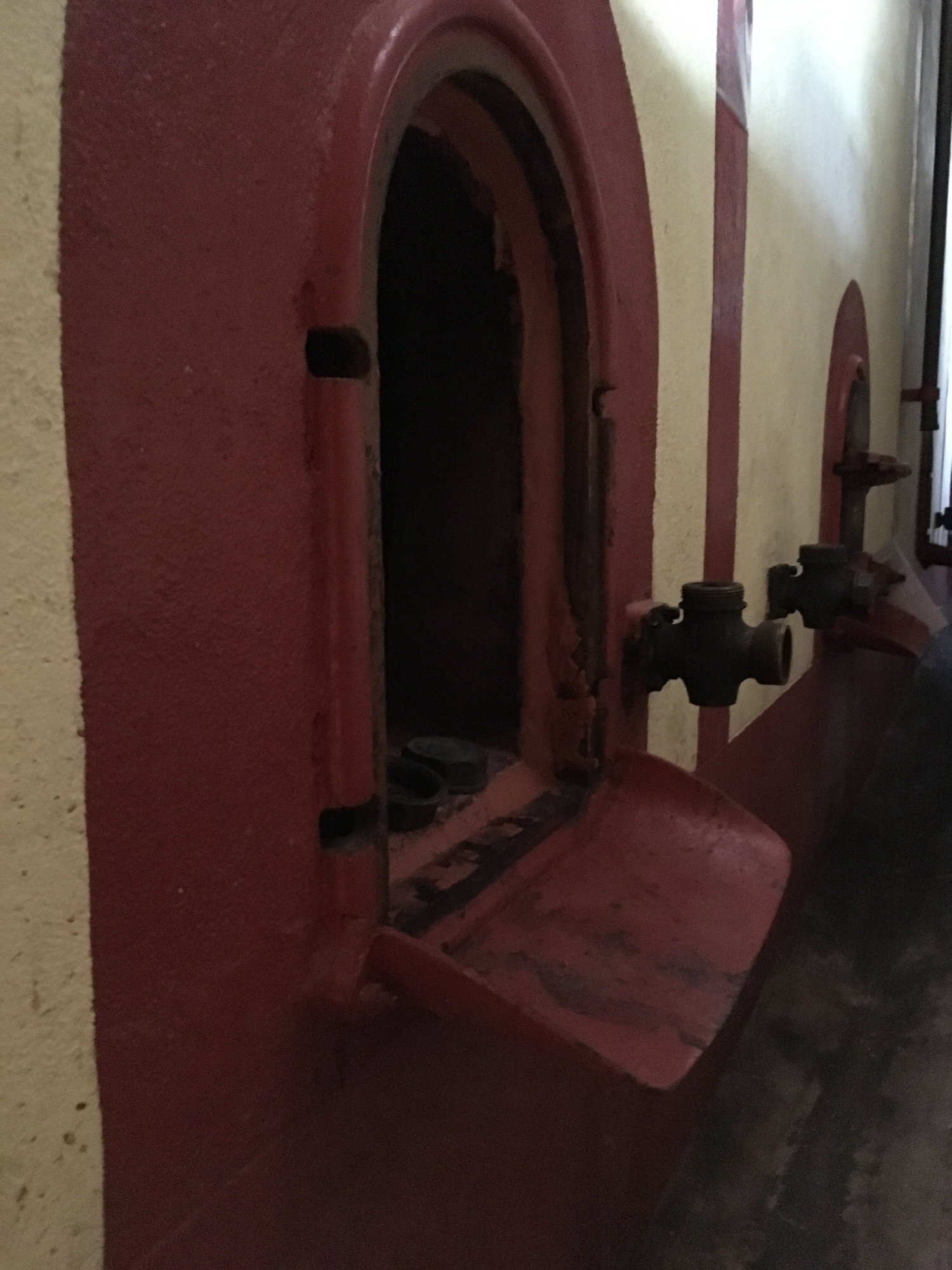
Winemaking at Domaine des Favards is shaped by the personality of each cuvée rather than a single house style. The entry-level reds are vinified with deliberate attention to freshness and approachability, preserving primary fruit without the weight that can come from extended maceration or oak ageing. Les Brigands receives an élevage of 12 months in oak barrels — not to impose wood character but to layer complexity onto what is already a powerful, fruit-driven base from Plan de Dieu terroir, introducing two aromatic registers: the toasted, roasted, and smoky on one hand; caramel, vanilla, and cacao on the other. The most technically distinctive approach belongs to Carigno Mio and its successor Diagonale 856, both made by whole-cluster vinification. Harvested by hand into small crates, intact clusters are stacked in tank without crushing; fermentation proceeds intracellularly, inside each individual berry, with no free-run juice. Once fermentation is complete within the berry, the wine is pressed to extract it. This method required the purchase of a dedicated tank suited to its specific constraints. For Carigno Mio, the old-vine Carignan parcel — planted in 1932 and worked entirely by hand, as its row spacing and vine architecture demand — is managed without mechanized tillage between the rows.
Philosophy
Organic certification at Domaine des Favards is less a marketing credential than a daily discipline, one that deepens with each passing season. Céline's approach is guided by a commitment to working in ever-greater harmony with the environment around the vines. The most significant recent evolution has been the move to total cover cropping across all parcels — a full carpet of vegetation maintained year-round to nurture soil biodiversity. A soil rich in plant species sustains a corresponding richness of insect life; that insect diversity in turn keeps would-be pests in natural check, no species allowed to proliferate unchecked when it must compete with dozens of others for the same space. Winter has brought another innovation: vitipastoralism. In partnership with the syndicat of Cairanne, Céline helped organize a village-wide grazing campaign across Violès, pooling parcels from willing growers to offer a livestock farmer sufficient continuous surface to bring three flocks of 300 head each across the winter without repeated costly moves from his base in the Var. The ewes and lambs fertilize the soil through their droppings, provide natural mowing that would otherwise require tractor passes, and by avoiding those passes, spare the soil the compaction that mechanized work inevitably brings. Beyond the agronomic calculus, Céline is candid: it is simply wonderful to watch the ewes and their lambs running through the vines.
History
The domaine has been a family affair across multiple generations, its name inherited from a great-grandfather whose Provençal nickname, le Favard, became its permanent identity. Céline took over the family estate in 2010, arriving not from a winemaking school but from a first career in the chemical industry, where she worked in research and development for a company that extracted resveratrol from sarments — vine pruning waste — for use in cosmetics. The transition from executive to vigneron was made without regret. That same year, Céline purchased an adjacent parcel on Plan de Dieu, believing it to be Grenache; it was discovered at the moment of signing the deed of sale to be Carignan, planted in 1932 — almost certainly by a friend of her grandfather's. Her father's instinct was to pull the old vines out and replant cleanly. Céline held firm. That parcel became Carigno Mio, the first cuvée she created at the domaine, and remains its most singular expression. The domaine has also operated a campsite for more than 30 years, welcoming tourists into the vines and cellar — a tradition that, in its own way, led to the partnership behind Diagonale 856.
Wines to know
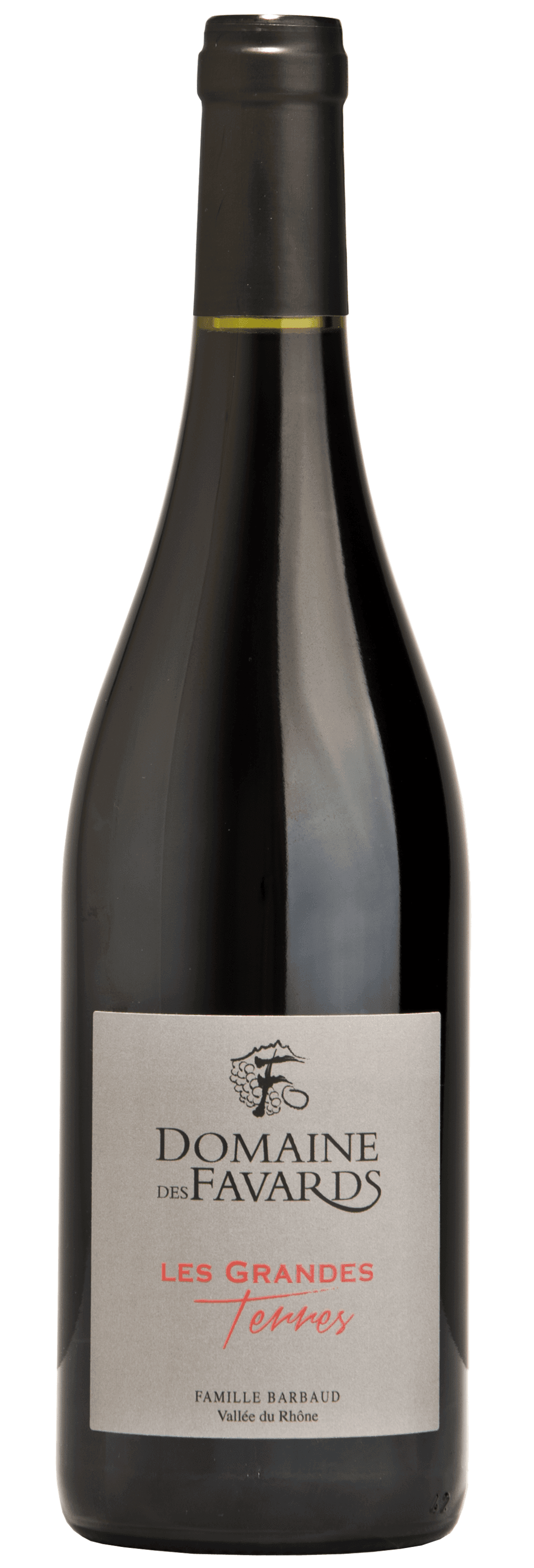
Les Bons Moments (rouge) is a Côtes-du-Rhône assembled from Grenache and Syrah, vinified expressly for freshness, lightness, and immediate fruit pleasure. It is designed for early drinking, happy to be served with a slight chill in summer — half an hour in the refrigerator before opening. Les Bons Moments (blanc) follows the same philosophy of ease and generosity, assembled from Roussanne, Marsanne, Viognier, and Clairette. Les Grandes Terres is a Côtes-du-Rhône named for the lieu-dit where its grapes are grown, a blend of Grenache, Syrah, and Mourvèdre — the Mourvèdre adding spice, structure, and aromatic complexity to the classic southern Rhône backbone. Plan de Dieu (rouge) is the domaine's straightforward entry into its galets terroir, a Grenache-Syrah assemblage that is more powerful and more gourmand than the Côtes-du-Rhône cuvées, at home alongside braised beef, ratatouille, or a grillade. Les Brigands is the prestige cuvée of Plan de Dieu, an assemblage of Grenache, Syrah, and Cinsault from vieilles vignes — parcels planted in part by Céline's grandfather — aged 12 months in oak barrels to build aromatic complexity atop a core of very ripe red fruit and poivré spice. Carigno Mio is a whole-cluster vinification of Carignan from a parcel planted in 1932 on Plan de Dieu, the first cuvée Céline created at the domaine and an irregular release dependent on vintage conditions; its name is a Spanish diminutive of endearment, a tribute to the grape's Iberian heritage. Diagonale 856 applies the same whole-cluster method to Syrah, made as a collaboration between Domaine des Favards and the team at La Cave Wines; the name encodes the 856 kilometers between the two cellars, with the diagonal representing the geographic line connecting Céline's estate in the Vaucluse to La Cave's first location in Normandy.
Wines from Domaine des Favards · Céline Barbaud
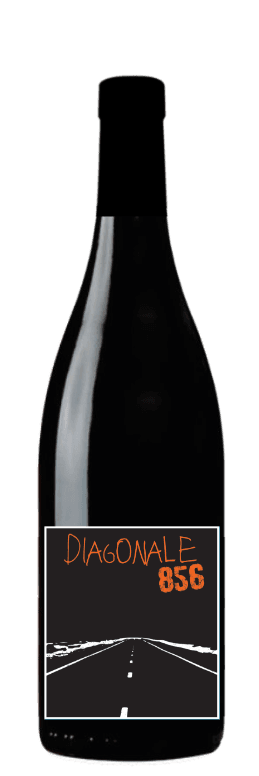
Syrah, Rhone Valley
Rhône · Côtes du Rhône VillagesCOTES DU RHONE - 'Diagonale 856' - 100% Syrah made especially for La Cave by Domaine des Favards
$28.90 Member Price$34.00 Regular
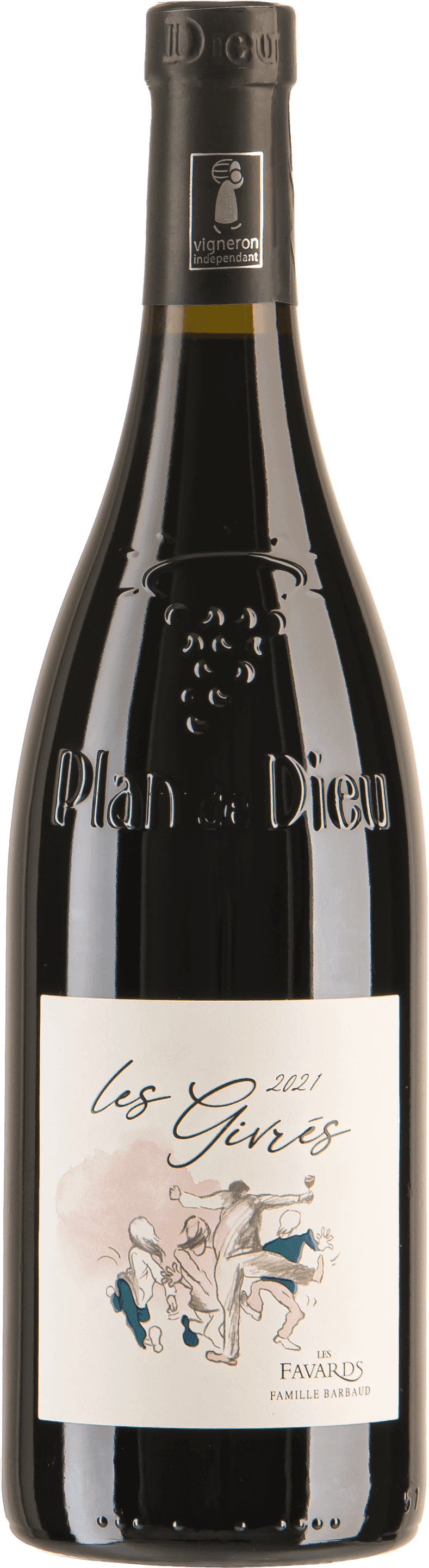
Red Blend, Rhone Valley
Rhône · Côtes du Rhône VillagesCOTES DU RHONE VILLAGES - 'Les Givres' - Meaty, rustic blend, truly one to represent its terroir.
$30.60 Member Price$36.00 Regular
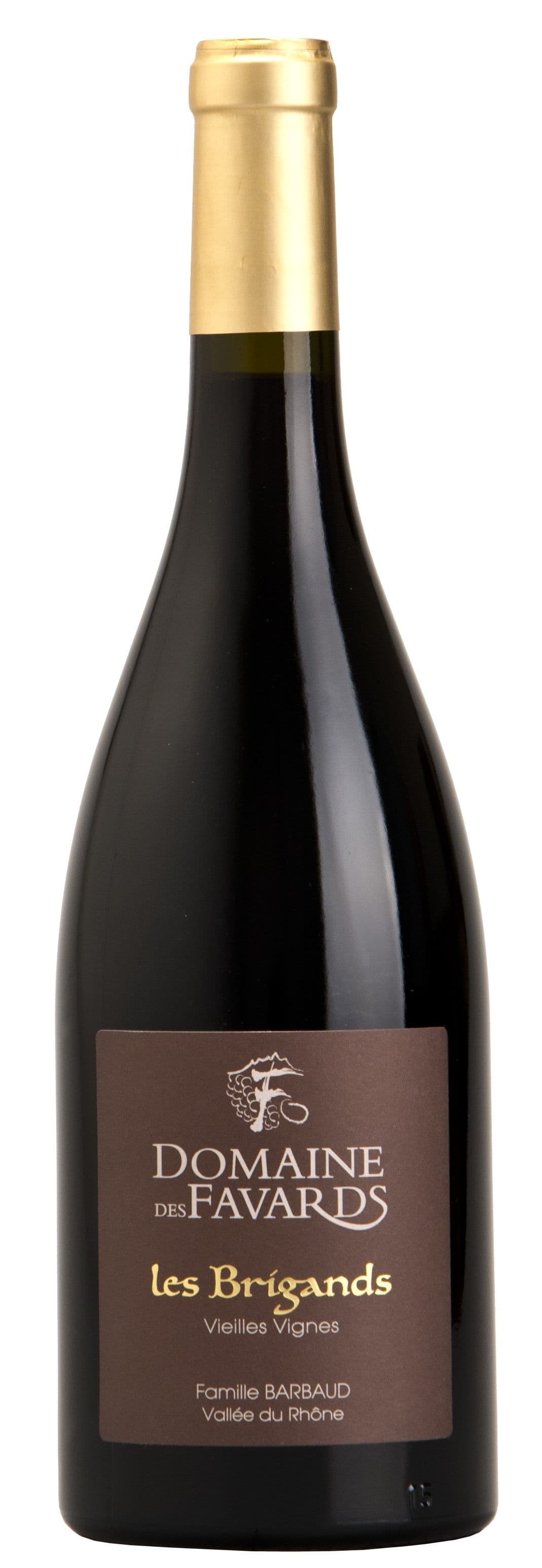
Red Blend, Rhone Valley
Rhône · Côtes du Rhône VillagesCOTES DU RHONE - 'Les Brigands'
$40.80 Member Price$48.00 Regular
Red Blend, Rhône
Rhône · Côtes du RhôneCÔTES DU RHÔNE - 'Les Grandes Terres' - Bold and meaty yet elegant red blend with red fruits & pepper notes
$20.40 Member Price$24.00 Regular