Domaine Guilleminot is a family Champagne house in the Côte des Bars, the southern reaches of Champagne, south of Troyes. Now in its fourth generation of Champagne-making, the maison farms approximately 35 parcelles across three distinct villages — Channes, the heart of the estate; Bragelogne; and the celebrated appellation of Les Riceys. The house style is built on assemblage, with extended cellar aging well beyond required minimums, and a long-running réserve perpétuelle that gives the wines a consistent voice across vintages. The angel that has become the symbol of the maison comes from Corinne Guilleminot's father's grandfather — a stone engraver who discovered a small cherub in one of his sculptures.
Terroir
The estate's 35 parcelles span three communes in the Côte des Bar, including the prestigious appellation of Les Riceys. The soil here is argilo-calcaire: a rich clay-limestone that gives the vines a firm mineral foundation. Exposition across the majority of the slopes runs south, southeast, and east, delivering optimal sunlight to ripen Pinot Noir to genuine depth. The Côte des Bar's irregular relief produces a diversity of hillside aspects, and it is this variation — parcel by parcel — that gives the winemaking team its palette at assemblage.
The estate farms 12 hectares in its own right and cultivates a total of 17 hectares. Vines average 25 years of age, though some of the oldest plantings reach 50 years — old enough to produce concentrated, character-driven fruit with roots drawn deep into the subsoil. Pinot Noir is the sole cépage cultivated by the family, and each of the three distinct terroirs represented across the parcelles is vinified separately before assemblage, allowing the wines to retain the individuality of each lieu-dit before being drawn together. It is this granular approach to the vineyard — parcel by parcel, terroir by terroir — that underpins the richness and aromatic range of the finished Champagnes.
Vinification
In Champagne, hand-harvesting is obligatory, and at Maison Guilleminot that discipline is matched by equally careful pressing: grapes are crushed at low pressure to preserve all their qualities before the must is transferred to tank and clarified. Alcoholic fermentation then begins in earnest.
A defining characteristic of the house — and a deliberate stylistic choice — is the complete absence of malolactic fermentation. Where many Champagne producers allow or encourage malo to soften acidity and round out texture, Guilleminot blocks it entirely. The result is wines of strong character and a sustained natural acidity that renders them not only fresher on the palate but significantly better suited to extended ageing.
The house maintains two distinct approaches to reserve wine. A single tank functions as a réserve perpétuelle — a continuously refreshed blend begun in 2014 — from which a portion is drawn each year to build the Prestige cuvée, before the tank is replenished with wine from the current vintage. This cumulative approach gives the Prestige its layered, consistent backbone across years. All other reserve tanks are kept as isolated vintages, never pre-blended, so that at assemblage the team can draw on the precise typicity of individual years. The discipline here is explicit: reserve wines must not age beyond their usefulness, and freshness — even in a cuvée built for ageing — is never sacrificed.
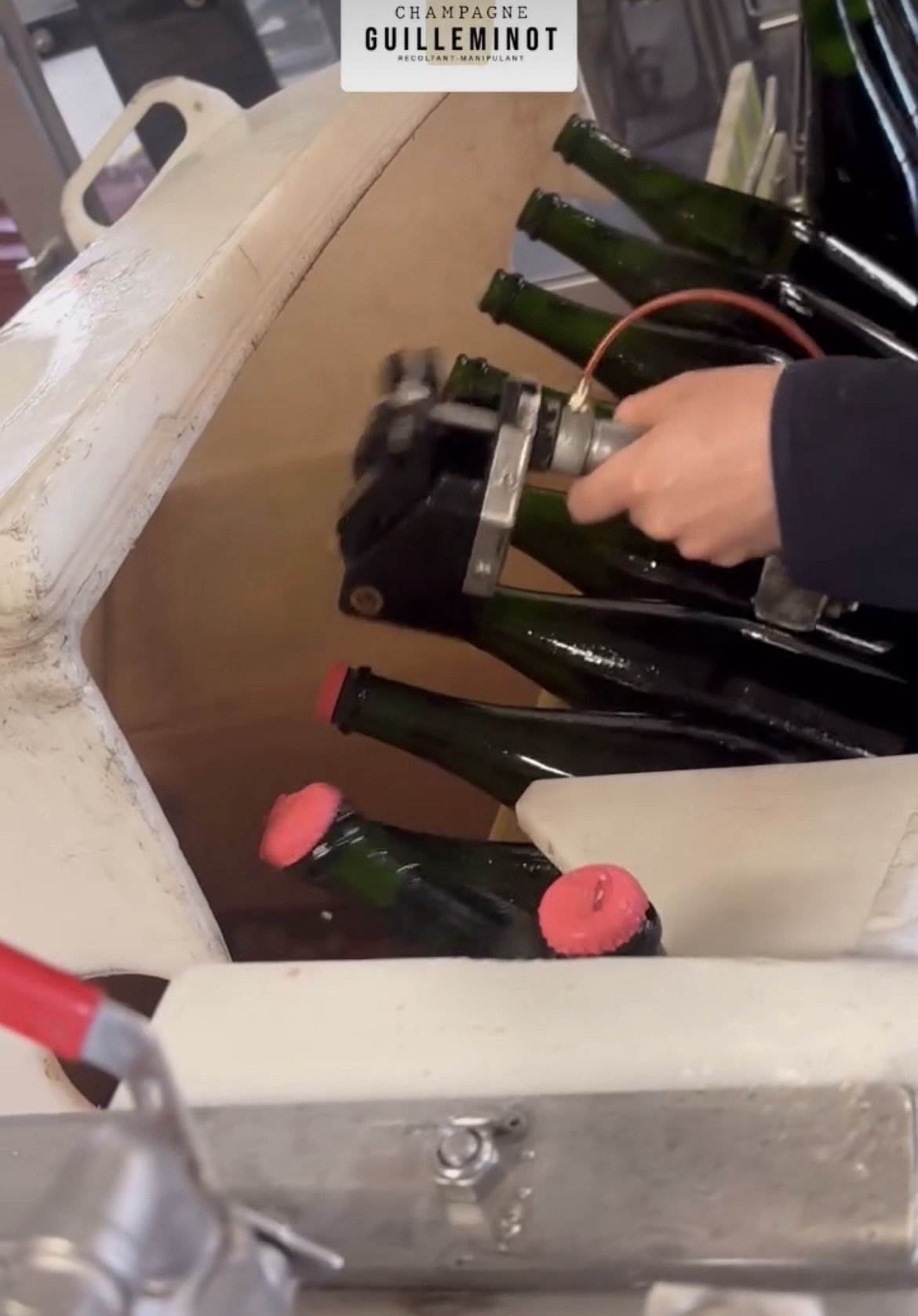
Following dégorgement, the house observes a minimum nine-month rest period before any bottle is shipped — a self-imposed standard that far exceeds regulatory requirements and reflects the conviction that recently disgorged Champagne needs time to settle and integrate before it reaches a glass.
Philosophy
Maison Guilleminot is built on two interlocking convictions: that quality Champagne begins in the soil and is shaped by hands that know it, and that a family enterprise is only as strong as its shared values. Agriculture raisonnée — reasoned farming that protects and nourishes the land without recourse to heavy chemical intervention — is not simply a certification here but a foundational commitment, one that has earned the house the designation haute valeur environnementale (HVE). The vines, properly cared for, give grapes of character; the rest follows from there.
In the cellar, the house's most consequential philosophical choice is the refusal of malolactic fermentation — an uncommon position in Champagne, where most producers rely on malo to soften their wines. Guilleminot's decision to preserve the natural acidity intact produces wines that are firmer, fresher, and structurally better suited to aging. This is not a compromise or a cost-saving measure; it is a statement about what Champagne can be when it is allowed to keep its tension.
The family's scale — human-scale, as Michel Guilleminot left it — is considered an asset rather than a limitation. Proximity to the clientèle, accessibility of the family, and the kind of responsive, non-routine work that only a small maison can sustain are all part of the proposition. The angelot logo encapsulates the balance the house seeks: deep attachment to Champenois tradition, expressed through a design that is modern, harmonious, and deliberately stylised.
History
The story of Maison Guilleminot begins at the turn of the twentieth century in Channes, in the heart of the Côte des Bar. It was the women of the Guilleminot family who first worked the vines — their husbands were stonemasons — and in that pairing, the two founding pillars of the house's artisanal identity were quietly established: a love of the vine and a respect for the work of hands. Viticulture and craft ran together from the beginning.
Henri Guilleminot, grandfather of the current generation, mobilised those founding values and began producing Champagne, transforming the family's vineyard work into a winemaking enterprise. His son Michel took the house a decisive step further: he constructed the cellars that remain central to the domaine's operation today and formally registered the marque. With that act, Maison Guilleminot was born — a small, human-scale house, built by Michel with a sensitivity to beauty, a respect for nature, and a deliberate modesty of ambition that left his three children something coherent to inherit.
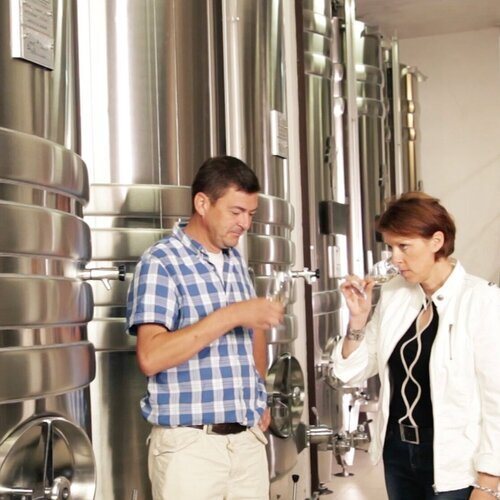
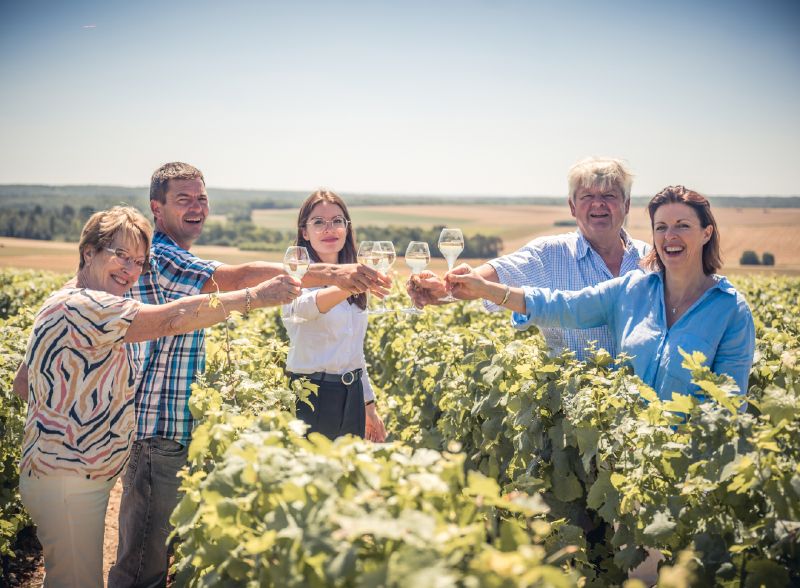
Those three children — Corinne, Patrice, and Carine — now carry the house forward. Corinne, trained as an oenologist, leads both the commercial life of the maison and the vinification, working in tandem with Patrice, who has never left the vines and whose physical expertise spans every stage of production. Carine, based in the United Kingdom after an original four-month stay that has stretched to twenty years, opens international markets and carries the family's values across borders. Three complementary profiles, one shared philosophy — and a generational inheritance that is described, simply and seriously, as the cement of the house.
Wines to know
Brut Tradition — The house's entry point. Aged three years in the cellar (the minimum is 15 months), the Tradition is the accessible Champagne of the range: fruity, with a beautiful lightness and a lovely length. Built for moments where you want Champagne to be welcoming rather than declarative.
Prestige — Built around a réserve perpétuelle and aged five years in the cellar, the Prestige is far more complex and structured than the Tradition — substantial enough to open a meal. The continuity of the réserve perpétuelle gives the cuvée a layered, cumulative character that no single-vintage approach can replicate.
Extra Brut — A recent release, drawn predominantly from the 2020 harvest, with a lower dosage because the balance called for less. The reduced dosage gives the wine a leaner, more direct expression of the vintage.
Rosé — Assembled from coteaux champenois — a light red wine made after a short maceration designed to capture only fruit and no tannin — then blended with one of the house's more fruity white wines. The result has real presence, a deep color, and an accentuated fruit character. A Brut in dosage but generous in spirit, equally at home at the end of a meal or in the middle of an afternoon.
Belle Année — A millésime, released only when a harvest warrants it. The Belle Année isolates a single parcelle and a single wine — no assemblage, just the pure expression of the year. First made in 2002, then reintroduced in 2015. The 2017 is currently available; the 2020 will be next. Built for finesse and aging potential, not for the heady richness that vins de réserve can bring.

Wines from Champagne Guilleminot
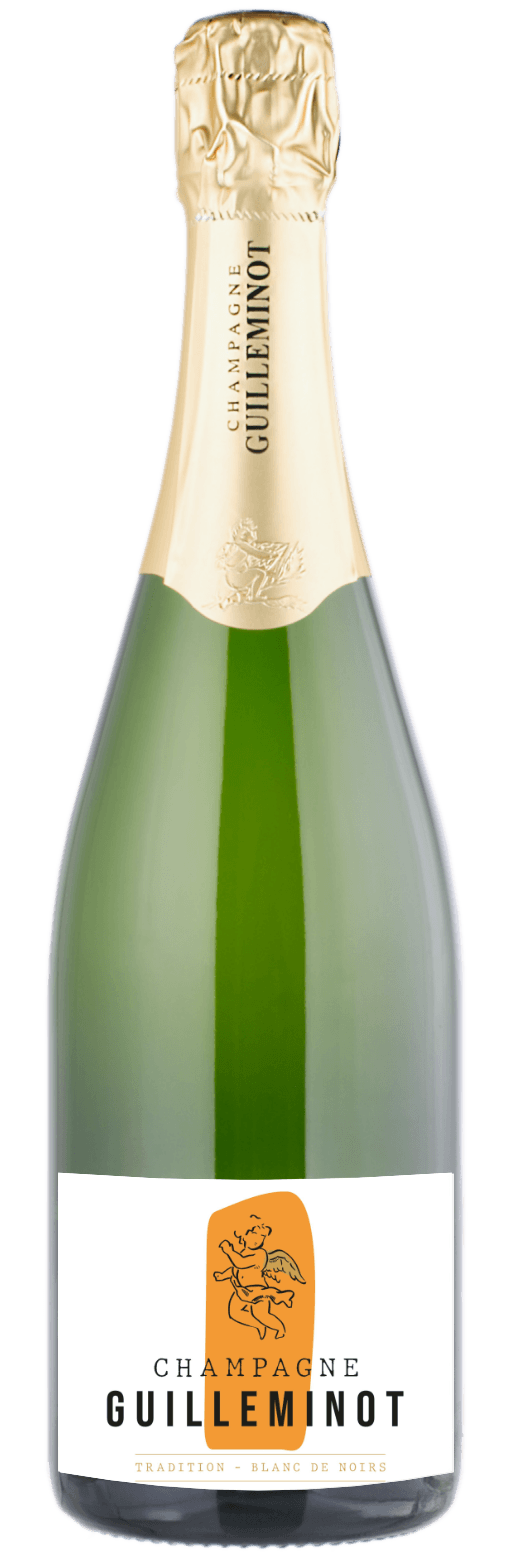
'Blanc de Noirs' Tradition, Champagne
Champagne'Blanc de Noirs' Michel GUILLEMINOT - Elegant robe, bright acidity & notes of red fruits
$46.75 Member Price$55.00 Regular
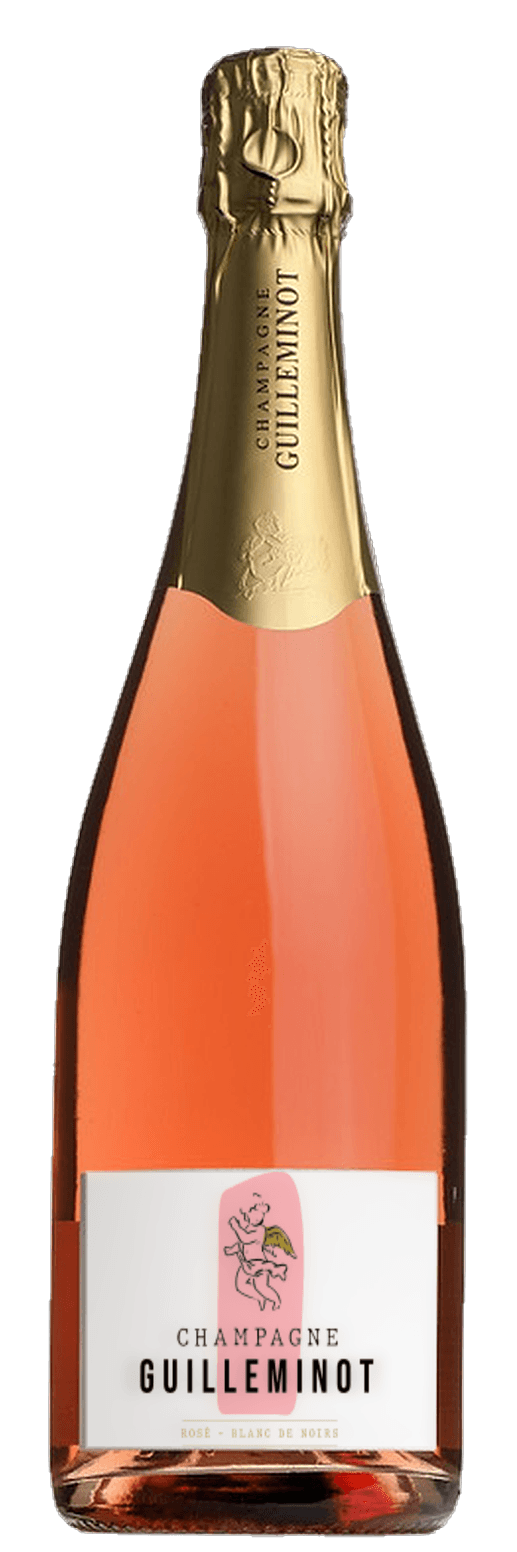
Rosé, Champagne
Champagne · Rosé des RiceysMichel GUILLEMINOT - Vibrant robe, red fruit aromas, crisp acidity & fine mousse
$55.25 Member Price$65.00 Regular
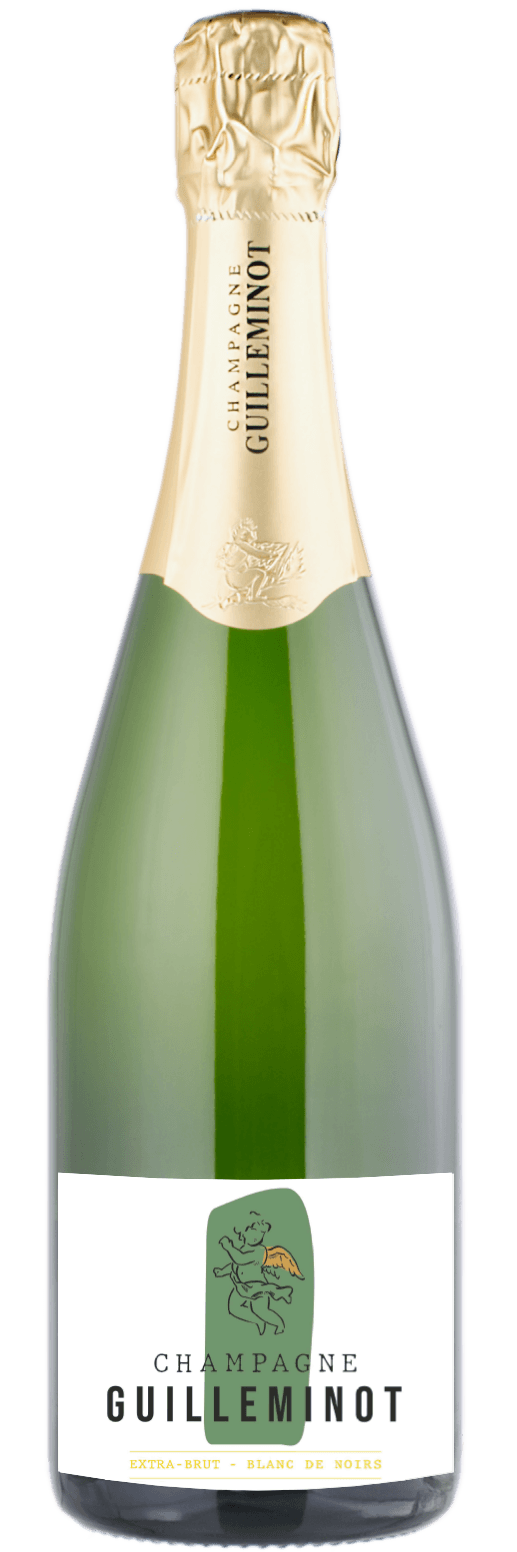
Extra Brut, Champagne
Champagne'Blanc de Noirs' Extra Brut Michel GUILLEMINOT - Pure expression, mineral precision & crisp red berry notes
$63.75 Member Price$75.00 Regular
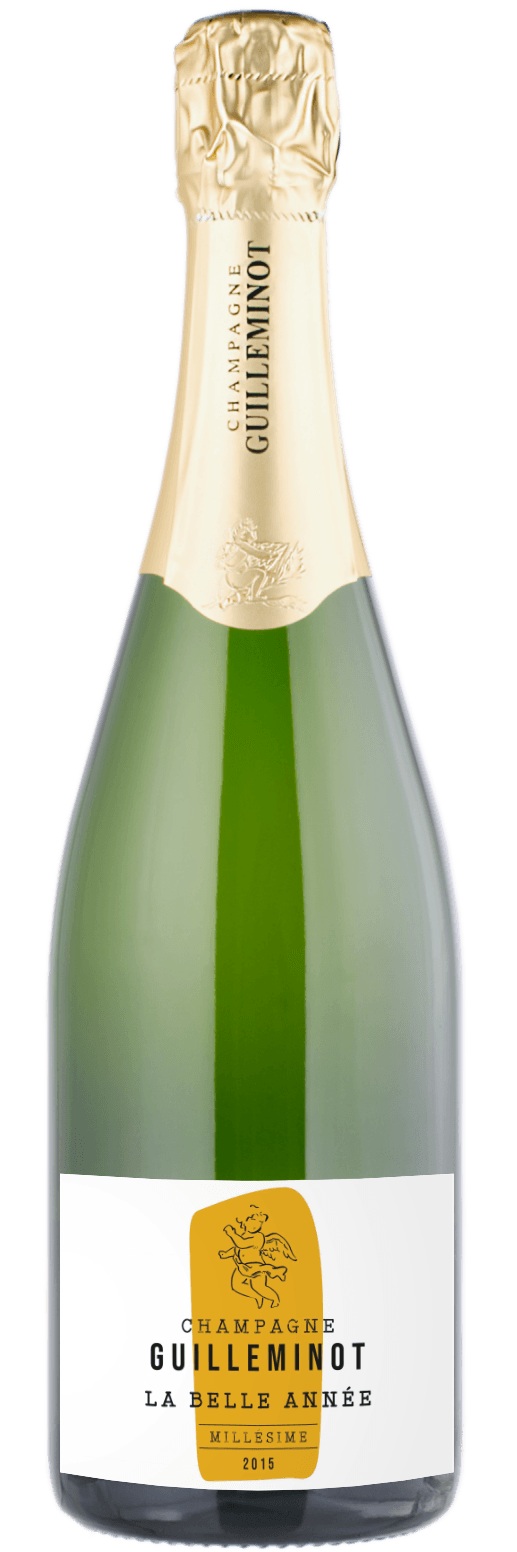
2019 La Belle Année, Champagne
Champagne'Blanc de Noirs' Michel GUILLEMINOT
$80.75 Member Price$95.00 Regular
From the vineyard