
Florent Thinon is a vigneron working in the Côte Roannaise, based in the commune of Villemontais in the southern reaches of the appellation. Farming nine hectares organically and biodynamically, certified under the Biodyvin label, Thinon works with two varieties that define this corner of France: the indigenous Gamay Saint-Romain and Chenin. His is a small, painstaking operation — every gesture in vine and cellar deliberate — producing three distinct cuvées that together reveal the breadth of what this appellation can offer, from joyful, lighter-footed reds to more structured, site-specific expressions and a nascent Chenin Blanc. The domaine is young, but the commitment to quality and place is already fully formed.

Terroir
The Côte Roannaise runs along the granite foothills of the Monts de la Madeleine in the upper Loire, with the Côtes du Forez as its neighbour to the south — a corner of France where Gamay Saint-Romain reigns as the true indigenous grape, a living thread connecting the landscape to its viticultural identity. Thinon's nine hectares span a variety of soil types across the commune of Villemontais, in the southern part of the appellation. The foundational geology is granite, which appears in different expressions across the domaine: sands and granites on the lower parcels that give the cuvée Le Rouge its lightness and drinkability, and granites intermingled with clays at higher elevation for the cuvée Mayençat, reaching approximately 500 meters. For Le Crozet, a Chenin Blanc planted by Thinon himself in 2019, the soils shift to blue and pink granites alongside clays — a visually and mineralogically distinct terrain that lends the wine its particular character. Elevation, granite type, and clay content together create meaningful differences between parcels that Thinon translates faithfully into the cellar.
Vinification
Thinon's approach in the cellar is unified by a commitment to working by hand and intervening as gently as possible. All harvests are conducted as vendange manuelle. For the two Gamay Saint-Romain cuvées, vinification runs approximately fifteen days, with 30% whole clusters incorporated — a choice that brings aromatic lift and textural nuance without overwhelming the wine's fundamental drinkability. Pump-overs are kept deliberately small, performed morning and evening not to extract aggressively but to encourage slow, gentle infusion of color and tannin. The cuvée Mayençat receives a longer élevage than Le Rouge, a decision rooted in the structural potential of its higher-altitude, granite-and-clay parcel. For Le Crozet, the Chenin Blanc, fermentation is divided between tank and 500-liter barrels, followed by an élevage sur lie — an approach that builds texture and complexity while respecting the freshness of young vines. Across all three cuvées, the cellar philosophy is one of precision and restraint.
Philosophy
At the heart of Thinon's approach is a belief that great wine is earned incrementally — through serious work in the vineyard, serious work in the cellar, and an unflinching willingness to question what has already been done. Nothing, in his view, is ever set in stone. This is not a domaine that has arrived at a fixed method and will repeat it indefinitely; it is one that treats each vintage as an opportunity to learn. The decision to farm organically and biodynamically from the outset, with Biodyvin certification, reflects a respect for the land that precedes any commercial calculation. Growth, when it comes, will follow quality rather than lead it — a philosophy of gradual, demand-led expansion rooted in the conviction that doing things right matters more than doing them at scale.
History
Florent Thinon established his domaine in 2020, taking over nine hectares of vines from his uncle in the Côte Roannaise. The transition preserved an existing agricultural foundation while introducing Thinon's own vision: full conversion to organic and biodynamic farming, certified by Biodyvin, and a tightly focused range of three cuvées. Notably, Thinon had already begun preparing for the domaine's future before his official installation, planting young Chenin vines in 2019 — the fruit of which now forms the basis for Le Crozet. Though the domaine is in its earliest years, it was built on inherited land with existing vine stock, giving it an immediate rootedness in place that many newer projects take a generation to achieve.
Wines to know
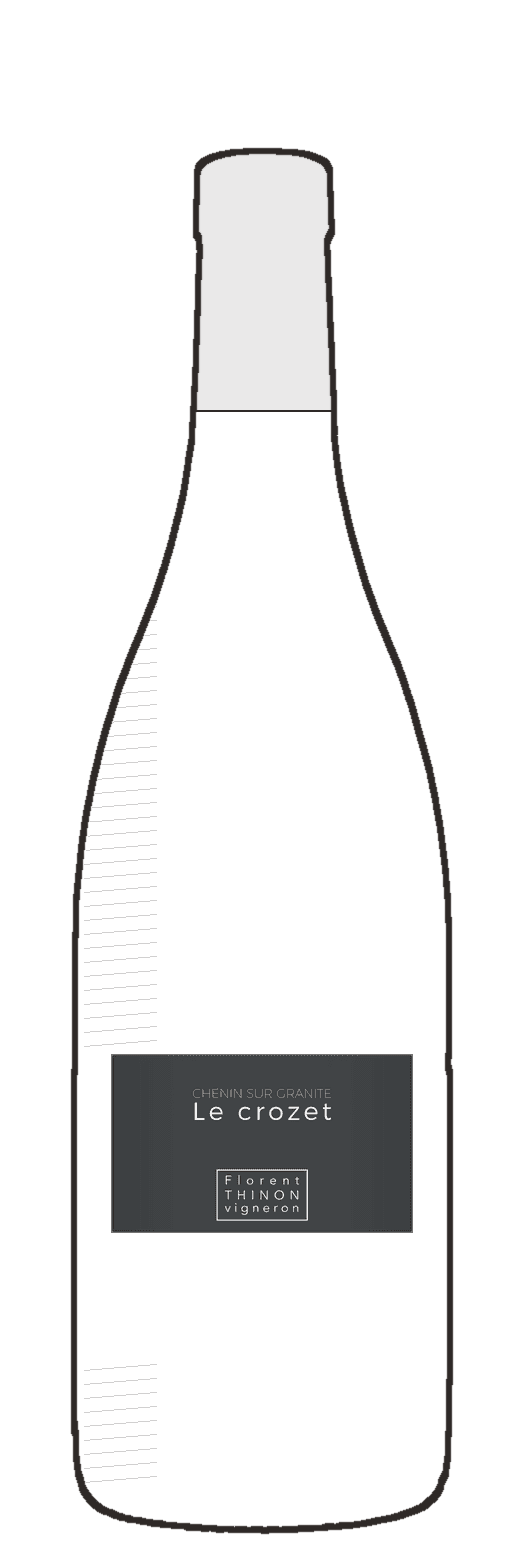
Le Rouge is Thinon's entry point into the Côte Roannaise: a Gamay Saint-Romain assembled from multiple parcels on sands and granites, designed above all for buvabilité. It is a wine of pleasure and ease, light on its feet, built for the table rather than the cellar. Mayençat steps upward in every sense — a single-parcel Gamay Saint-Romain from granite and clay soils at approximately 500 meters, vinified identically to Le Rouge but given a longer élevage. The result is a wine with more structure and greater length on the palate, the elevation and soil complexity expressing themselves in a more considered, layered register. Le Crozet is Thinon's Chenin Blanc, made from young vines he planted himself in 2019 on blue and pink granites and clays, and bottled as IGP Urfé since the Côte Roannaise appellation covers only red and rosé. Fermented in both tank and 500-liter barrels, then aged sur lie, it is a wine still finding its full voice as the vines mature — and one that signals the domaine's ambition to articulate the full breadth of its terroir.

Wines from Florent Thinon
Gamay, Loire
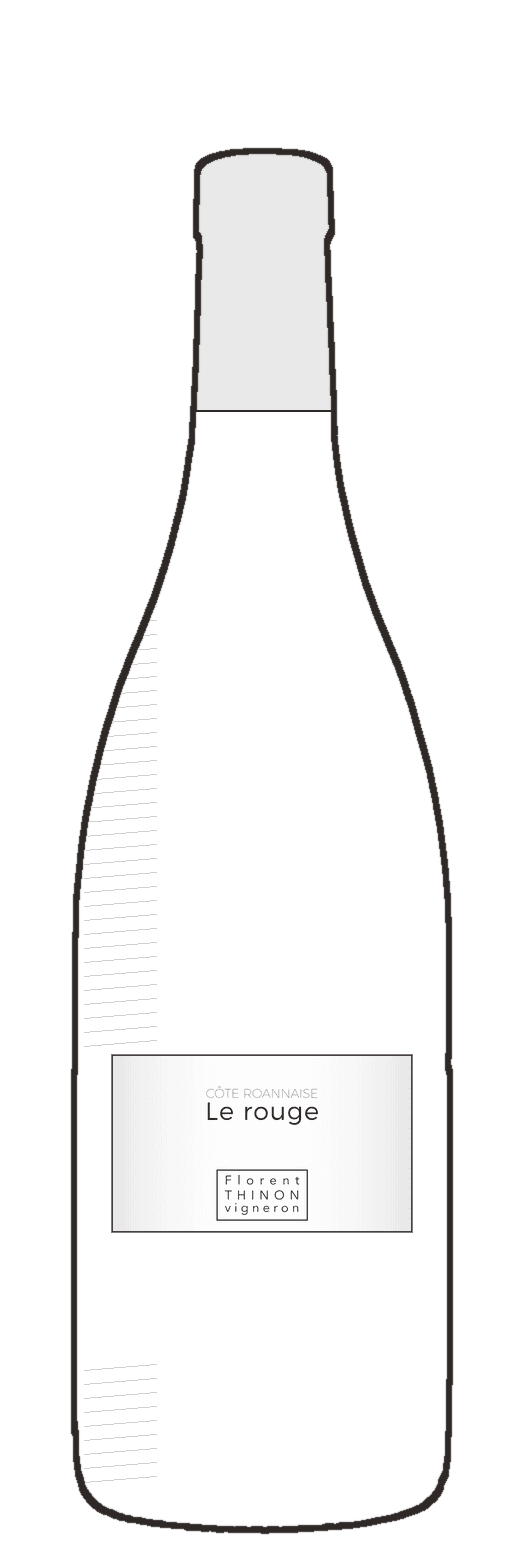
Loire · Côte RoannaiseCOTE ROANNAISE - Le Rouge 2025, Florent Thinon
$28.90 Member Price$34.00 Regular
Gamay, Loire
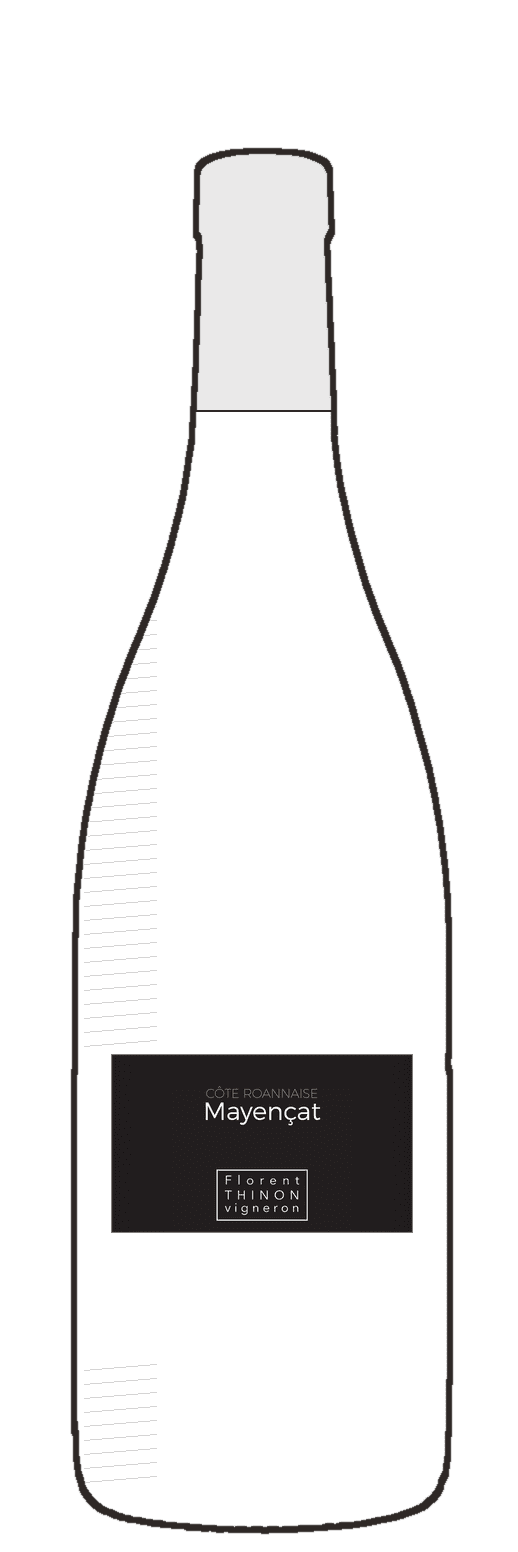
Loire · Côte RoannaiseCOTE ROANNAISE - Mayencat 2024, Florent Thinon
$38.25 Member Price$45.00 Regular