

Domaine Fanny & Lucien Rocault is a small, organically certified estate rooted in the village of Saint Romain in Burgundy's Côte de Beaune. Lucien Rocault represents the eighteenth consecutive generation of viticulture in his family, a lineage traceable through clerical registers to 1470 and, by the first traces of actual vine cultivation, to 1280. When Lucien struck out independently in 2009 at the age of twenty-six — breaking from a family tradition of selling grapes to the cooperative — he did so with the conviction that terroir, not the winemaker, is the true author of great Burgundy. His wife Fanny, whose name appears alongside his on the label, became an increasingly central partner from 2014 onward, guiding the domaine's commercial development and its broader identity. From a starting parcel of barely 80 ares, the estate has grown to encompass a carefully assembled range of appellations across the Côte de Beaune and the Hautes Côtes, all farmed organically.

Terroir
The domaine's vineyards are spread across several appellations of the Côte de Beaune and the Hautes Côtes de Beaune, with Saint-Romain, Beaune, Pommard, Pommard 1er Cru 'Les Charmots', Saint-Aubin 1er Cru 'En Remilly', and Bourgogne Aligoté all represented. The village of Orches and the appellation of Saint-Romain sit tucked behind the escarpment, nested in the small valleys formed by the tectonic collapse known as the Fossé Bressane — a geological event triggered by the collision of the African and Eurasian plates and the subsequent emergence of the Alps, which caused the underlying plateau to sag and fracture. This faulting scattered previously ordered sedimentary strata, placing soils of dramatically different character in very close proximity to one another; the shift from one lieu-dit to the next can bring an entirely different wine. Throughout the estate, soils are argilo-calcaire — clay and limestone — though the ratio shifts meaningfully between parcels. Saint-Romain, for example, descends rapidly to near-solid limestone rock beneath a shallow surface layer of mixed clay and friable stone, affording vines very little water reserve and rendering them vulnerable to hydric stress in hot, dry vintages. Elevation, exposition, and the slope's position on the hillside all intersect to define each appellation: vines on the valley floor carry the Bourgogne designation, village-level vines occupy the lower and upper reaches of the slope, while the 1er Crus are concentrated in the privileged mid-slope band. Exposure across the Côtes de Beaune is predominantly east-facing, though the folded terrain introduces southeast, west, northwest, and southwest aspects within a relatively confined territory. Meursault lies in the nearest valley to the east, with Auxey-Duresses as the immediate neighbor to the south.
Vinification
Winemaking at Domaine Fanny & Lucien Rocault is guided by restraint and a commitment to expressing each parcel rather than imposing technique. All grapes are harvested by hand into small cases, with the exception of a portion of the Hautes Côtes de Beaune. White grapes are pressed immediately upon arrival at the cellar and settled in vat for twenty-four to forty-eight hours to allow solids to fall before the clear juice is transferred directly to oak barrels for fermentation. The Aligoté is the sole exception, remaining in vat throughout. For the reds, grapes are entirely destemmed — only the berries are retained — and placed in vat for a maceration of approximately twenty days, during which pump-overs, or pigeage, are performed, much of it still carried out by foot. Temperature control varies by volume: smaller lots such as Pommard and Beaune ferment in temperature-controlled vats, while larger volumes such as the Hautes Côtes ferment in concrete vats fitted with internal regulators. After maceration, the free-run juice, or jus de goutte, is drawn off separately; the skins are then pressed and the press wine blended back with the free-run before the wine goes to barrel for élevage. All fermentations proceed on indigenous yeasts exclusively. Commercial yeasts have never been introduced — their killer factor would eliminate the native populations that have acclimated to the cellar over years and which Lucien regards as central to his house style. Malolactic fermentation is ideally allowed to complete naturally after winter, in spring, though its progression varies by cuvée and vintage. Barrel selection is cuvée-specific: Lucien favors 500-liter demi-muids over the traditional 228-liter Burgundy pièce, finding that the larger format softens oak's influence on the wine. Barrels are sourced from multiple coopers, each matched to a specific wine, and are rotated through the cellar — newer wood going first to the village-level and premier cru wines before passing to the Hautes Côtes for two to three years, for a total life cycle of roughly five years. For the whites, barrels bent over warm water rather than fire are favored, imparting minimal toast and preserving the wine's freshness. Only the Pommard 1er Cru, with its structure and weight, receives wood with a more marked toast. The domaine is bottled by a mobile bottling unit on-site.
Philosophy
For Lucien Rocault, the winemaker's role is not to author the wine but to serve as its guardian and translator. In Burgundy, where terroir speaks with uncommon clarity, the cellar's task is to magnify what the vineyard has already made — to ease the passage from grape to wine and to make the right choices of wood and method without obscuring the source. The base is always made in the vineyard, always born of the terroir. Equally fundamental is a pursuit of freshness and conviviality. Lucien's ambition, particularly for the Hautes Côtes wines, is to produce bottles so easy and alive that one glass leads almost involuntarily to another — wines that belong at the table, not on a pedestal. Alcohol beyond roughly 14% is seen not as a mark of ripeness but as a threat to pleasure. As warming vintages push sugar accumulation ever earlier, harvesting decisions are now guided primarily by acidity rather than sugar levels, protecting the freshness that defines the domaine's style. Organic viticulture has been practised from the very first harvest in 2009, encouraged from the outset by Fanny. A decade of certified-organic farming has convinced Lucien that working without synthetic inputs demands far greater technical rigor than conventional farming — tighter hygiene discipline, more attentive cellar monitoring, and less margin for error at every stage. Indigenous yeasts are protected with the same care given to the vines themselves: their diversity and site-specific adaptation are treated as an irreplaceable component of the domaine's character, as singular and inalienable as the parcels from which the wines come.
History
Lucien Rocault began his first harvest in 2009, making him — at the time of this account — the eighteenth generation of viticulture in a family that has never left the village of Orches. The genealogy, drawn from clerical registers, reaches back to 1470, with the earliest evidence of family vine-growing dating to 1280. Despite this deep-rooted lineage, Lucien's father and grandfather were cooperative members who sold their grapes rather than vinifying, so when Lucien decided to make wine himself he was, in a meaningful sense, starting from nothing. His parents left him 80 ares of vines to begin with; he supplemented this with cereal farming to make the enterprise viable. Organic viticulture was embraced from the outset: 2009 served as a trial year, 2010 brought the first certified-organic harvest, and the wines themselves have carried organic certification since 2012. The estate grew steadily: in 2010 Lucien took on 3.75 acres of red Côtes de Beaune; in 2013 he purchased his Saint-Romain parcel; and 2014 proved the pivotal year, when his parents left the cooperative, making available the grapes for Saint-Aubin 1er Cru 'En Remilly', Beaune, Pommard, and Pommard 1er Cru 'Les Charmots'. Fanny joined the operation in a full working capacity that same year, having already shaped the project's visual identity and creative direction. The Saint-Aubin 1er Cru 'En Remilly' parcel subsequently came up for sale and was purchased outright, achieving organic certification shortly thereafter. The remaining Beaune and Pommard parcels continue under the family's separate entity, with Lucien purchasing the grapes.

Wines from Lucien & Fanny Rocault
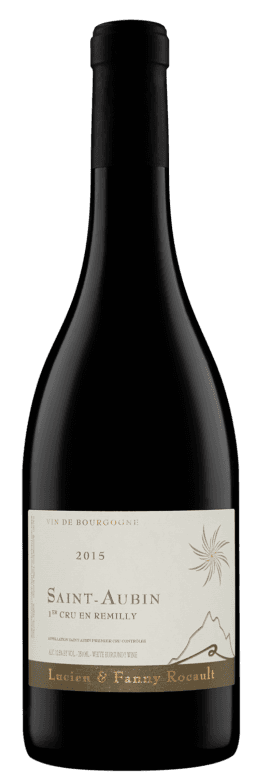
Chardonnay, Burgundy
SAINT AUBIN 1ER CRU "En Remilly" - Bright, lemon color, intense aromas.
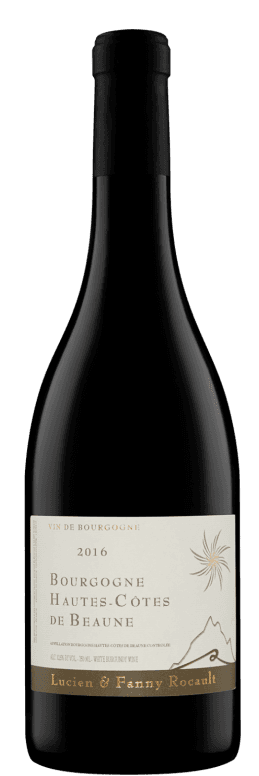
Chardonnay, Burgundy
HAUTES COTES DE BEAUNE - Rich wild flowers, mineral, honey subtleties.
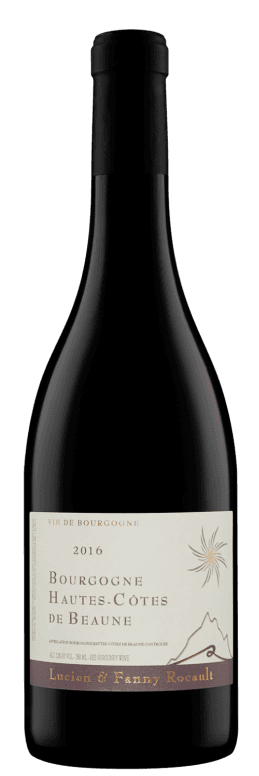
Pinot Noir, Burgundy
HAUTES COTES DE BEAUNE - Strawberry, blackcurrant & liquorice amongst many...
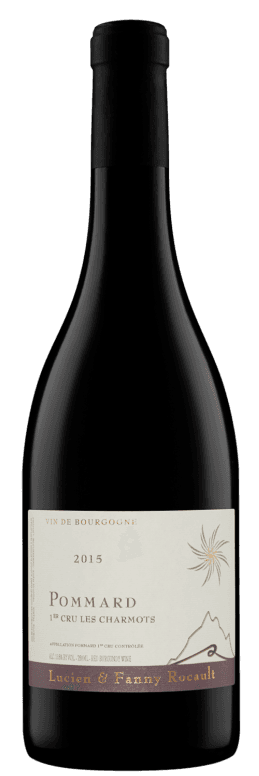
Pinot Noir, Burgundy
POMMARD 1er CRU "Les Combes Dessus" - One of the densest pinot noirs of the Côte de Beaune.